
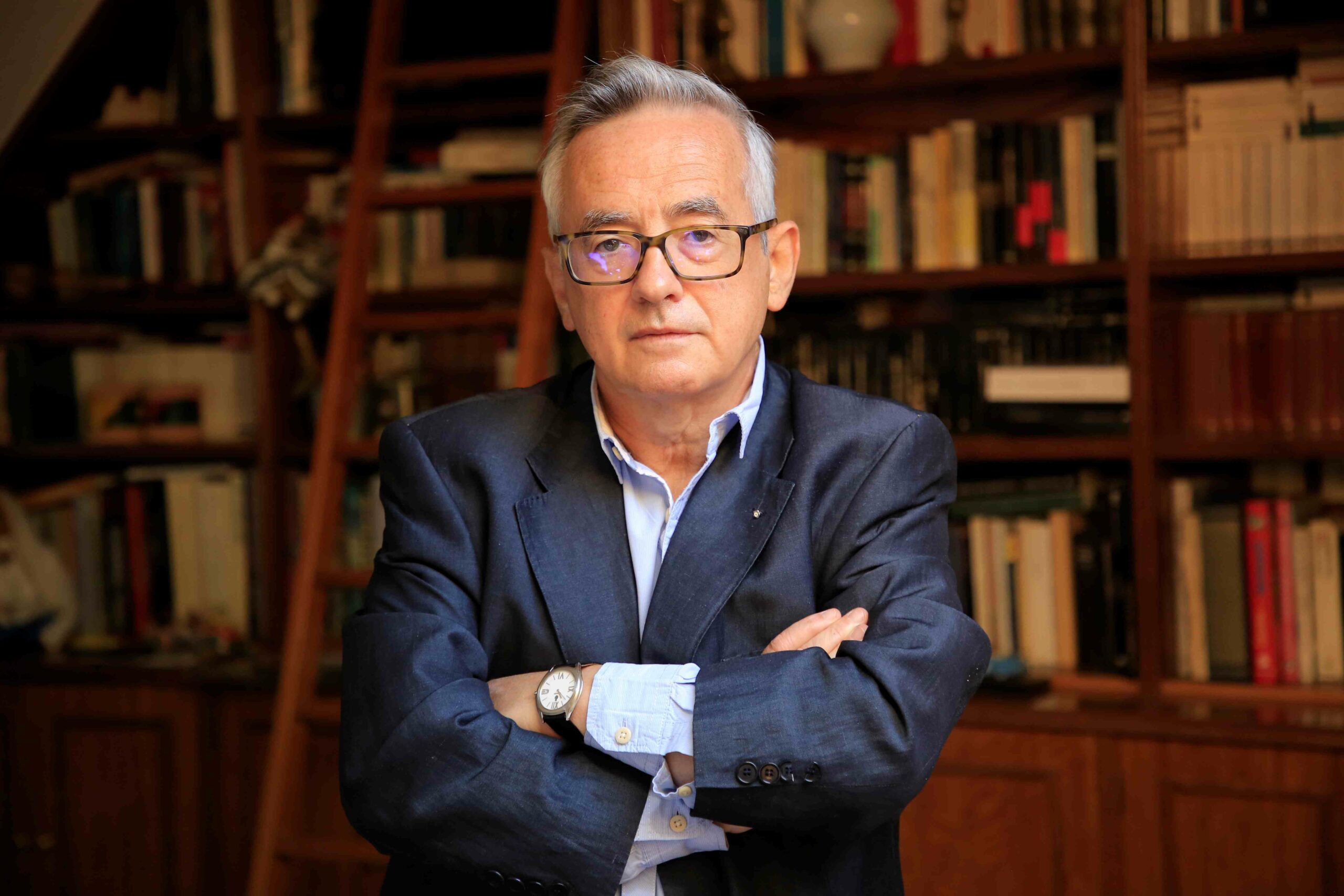
Interview with Manuel González, new President of the Federation of Publishers’ Guilds of Spain and Liber 2026
“New technologies must enhance efficiency without jeopardising creativity or intellectual property”
Manuel González Moreno has just taken office as President of the Federation of Publishers’ Guilds of Spain (FGEE), following his unanimous election by the organisation’s General Assembly. This position also involves assuming the presidency of Liber 2026, the leading professional trade fair for Spanish publishing, which will be held this year from 29 September to 1 October at Fira de Barcelona.
With a long career linked to the publishing industry and a particular focus on the challenges posed by technological transformation, artificial intelligence and the protection of intellectual property, Manuel González begins this new term with the commitment to strengthen dialogue between publishers, the entire book value chain and public administrations. His appointment comes at a time of transition for the sector, which is facing structural changes and new growth opportunities that will be reflected at Liber.
How would you describe the current situation of the publishing industry in Spain?
The publishing sector is experiencing a very positive moment, as we have enjoyed more than a decade of growth driven by the increase in reading habits. Since 2020, we have recorded sustained sales growth of around 5%, which has enabled us to recover turnover levels of €3,000 million, similar to those prior to the 2008 crisis. This is accompanied by a solid and growing presence in international markets, both through publishing houses with offices abroad and through exports. The book sector’s trade balance remains positive.
Generative AI, the rise of audiobooks and the diversification of formats are transforming the publishing value chain. What opportunities and risks does this new scenario present for publishers?
The book industry has historically known how to adapt to the different scenarios it has faced and to numerous catastrophic predictions about the future of publishing. That said, we must be able to take advantage of the opportunities offered by new technologies to improve operational efficiency, expand our presence both at home and abroad, and bring written creation to readers in the formats they prefer. At the same time, we are staunch defenders of creation and intellectual property and, therefore, we must warn against misuse and ensure their proper protection, preventing use without fair remuneration for creators and publishers.
Internationalisation is one of the strategic pillars of the publishing sector as a way to expand markets and boost rights sales. Which geographical areas are priorities and how can Spanish publishing strengthen its global presence?
We have the advantage of working in a language that is the mother tongue of more than 500 million people and is spoken by nearly 600 million worldwide. This gives us an enormous potential market for our books. Ibero-America remains a key region, as does Europe, which continues to be a priority territory. As we see every year at Liber, there is also growing interest, both from our publishers in being present in Asian and African countries and from prescribers and buyers of books and rights in these regions in the works produced by our companies.
Sustainability and rising production costs are putting pressure on the book industry. What structural changes does the publishing sector need in order to remain competitive without compromising cultural diversity?
One of the defining characteristics of Spanish publishing is its bibliodiversity. We have a very significant number of publishing houses, mostly small and medium-sized, which ensure the existence of an extraordinarily diverse catalogue. Many of them are highly specialised in specific subjects, which guarantees the publication of books for all kinds of interests.
To ensure the sustainability of the publishing ecosystem, it is essential to become increasingly efficient. In this regard, technology can be a great ally through systems such as print-on-demand, improved data and metadata management, and logistics optimisation. For this reason, FGEE promotes training for publishers throughout the year, both within the framework of Liber and beyond, with the aim of increasing business efficiency.
Reading indicators show progress, although there is still a long way to go. What policies or actions do you believe are most effective in expanding the reader base in Spain?
The most effective policy is undoubtedly the one implemented in schools. The efforts made by the education system to ensure that reading is present in a cross-cutting way throughout the teaching-learning process have been essential in making young people the most avid readers in our country today, according to the Reading Habits Barometer.
In recent decades, another decisive factor has been the creation of a wide network of public libraries, which citizens can use to read, study and borrow books. Moreover, these spaces have become genuine cultural and social hubs that help reinforce the value of reading.
In this sector context, Liber 2026 will take place. What role will the fair play as a barometer of the industry’s health?
Since its first edition, Liber has been a key event for showcasing new publishing releases to buyers from around the world, while also providing a space for debate and reflection on the main challenges and opportunities facing the sector. The fair enables us to understand the concerns of both publishers and the other stakeholders in the book value chain and to work together on possible solutions.
The Rights Centre and the buyer and prescriber programmes at Liber strengthen international exchange. What expectations do you have regarding their impact on exports in the Spanish publishing sector?
Liber has grown over time and incorporated programmes that facilitate the attraction of new publishing professionals from other countries. The buyer, prescriber, publisher and literary agent programmes, developed with the collaboration of Spain’s Economic and Trade Offices and sponsored by ICEX Spain Trade and Investment, the Ministry of Culture, the Government of Catalonia and CEDRO, as well as with the collaboration of Acción Cultural Española (AC/E), allow us to bring professionals interested in Spanish books to the fair, thereby strengthening the international presence of our publishing industry in strategic markets.
As part of this growth strategy, last year we created the Rights Centre to take advantage of the Liber framework to promote bilateral meetings between agents and publishing imprints, particularly focused on the acquisition of rights for translations, international editions and audiovisual projects. In its first edition, expectations were far exceeded, and we are confident that the same will happen this year.
Liber combines business and reflection. Which key topics do you expect to shape this year’s programme?
Last year we decided to give fresh momentum to the professional conferences by structuring them around the major topics of current interest for the sector. This year we will continue along the same lines, focusing debates on the main challenges, trends and opportunities through six thematic blocks: Liber Training, focused on professional education; Liber Innovation, dedicated to the use of new technologies; Liber Education, addressing the challenges of educational publishing; Liber Audiobook; Liber Sector, focused on analysing issues affecting publishing activity; and Liber International, devoted to reflecting on how to enhance publishers’ international projection. Each of these blocks is coordinated by an expert.
Finally, what message would you like to convey to all the professionals in the book value chain — publishers, authors, booksellers, distributors, librarians and agents — to encourage them to take part in Liber 2026?
I believe that, after 43 editions, Liber has rightly earned its place as a must-attend event for professionals in the Spanish publishing sector and as a key instrument for increasing the internationalisation of books published in our country. Moreover, the Professional Conferences offer an excellent opportunity for debate and reflection at a time of change and transformation such as the present. Liber ultimately allows us to showcase the strength of a sector that represents Spain’s largest and most important cultural industry.
Barcelona, May 2026
Photographs of Manuel González here
Photographs of Liber here
Maria Dolors Herranz
Fira de Barcelona – Liber
Tel. +34 93 233 25 41
[email protected]
Gerardo Miguel
FGEE Press Office
Tel. +34 91 576 52 50
[email protected]