
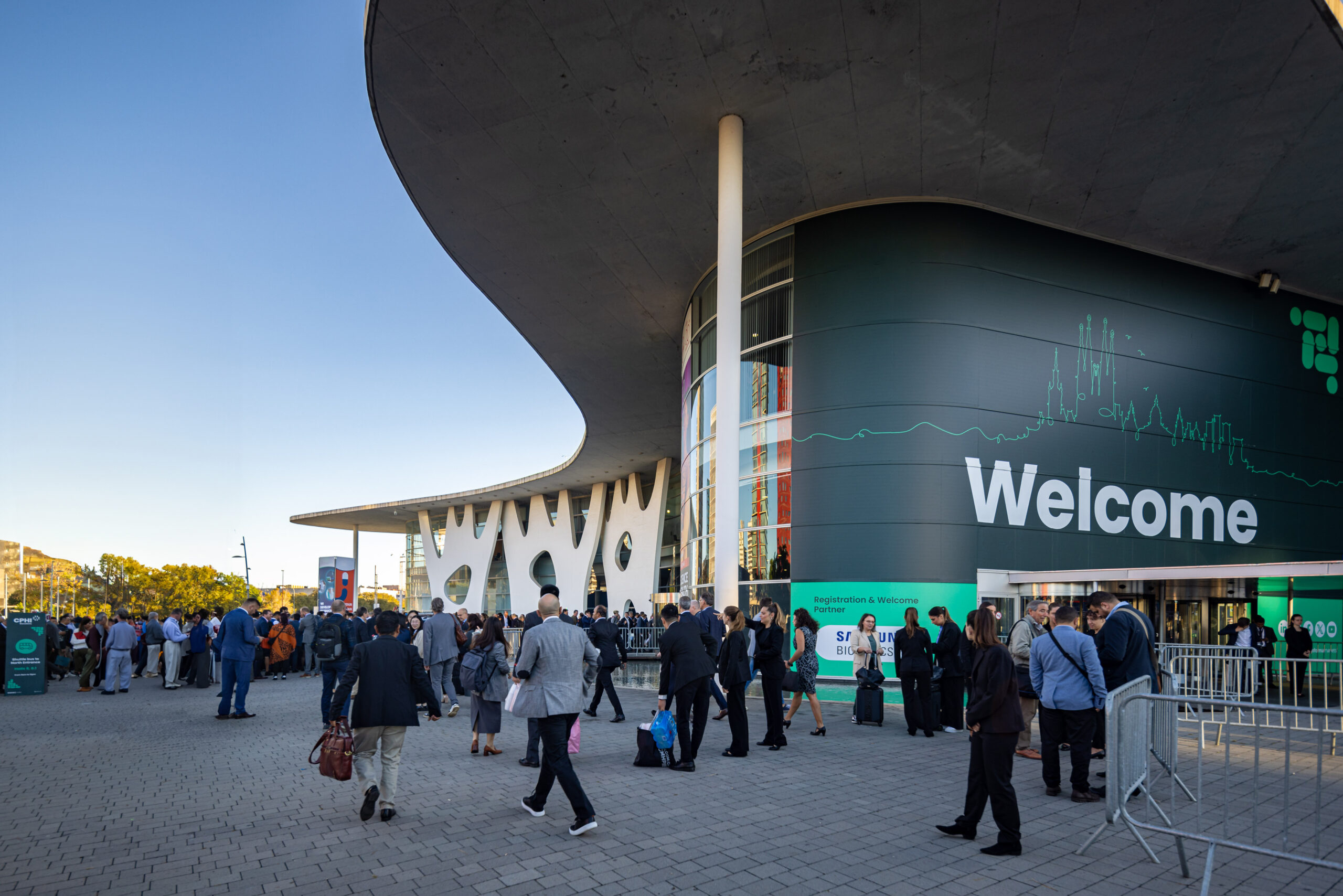
A study by the UB reveals that the institution's activity allows the creation of 49,423 jobs and a GVA of 2,959 million euros
The economic impact of Fira de Barcelona’s activity exceeds 6,100 million euros
Fira de Barcelona’s annual economic impact exceeds 6,100 million euros, generates a Gross Value Added (GVA) equivalent to 1% of Catalonia’s GDP and more than 49,000 jobs. These are some of the key conclusions of a new report prepared by the Barcelona Institute of Economics (IEB) of the University of Barcelona (UB) that confirms the growing importance of the institution as an economic and social engine of the territory.
The study indicates that the total impact of Fira de Barcelona’s activity has gone from 4,795.6 million euros in 2019, the last year analyzed in the previous report, to 6,143.51 million euros in 2024, an increase of 28.1%. This trade show activity boosts the economy in many areas, contributes to the generation of business for the participants in the events and the local industry, as well as the creation of thousands of jobs.
The report, focused on the activity in 2024 at the Montjuïc, Gran Via and Barcelona International Convention Centre (CCIB) venues, has been directed and produced by IEB researcher and lecturer at UB, Gemma Garcia, together with UB professor Núria Bosch and UB lecturer, Cristina de Gispert, also a researcher at the IEB.
The Chairman of Fira’s Governing Board, Pau Relat, said that “the study confirms the good course of the institution and its key role as a driver of the economy. The increase in impact is the consequence of the good work done in recent years and the growth and size of the shows held in our venues, many of them world leaders in their sectors.”
For his part, the General Manager, Constantí Serrallonga, concluded that “these figures together with record annual results, with over €350 million in revenue in 2025, push us to continue working with the aim of growing the events and strengthening the role of the institution as a strategic element in the economic and social development of the territory. In this sense, the commitment to innovation and new high-potential industries, together with the expansion of the venues already underway, will play a key role.”
Boosting the economy
The study uses the Input-Output methodology to calculate this impact taking into account three basic variables: the operating and organization expenses of shows and events, the expenses of visitors and exhibitors and the creation of business that is attributed to exhibitors by participating in the various events. The final figure is the result of calculating the direct, indirect and induced effects.
Thus, according to the report, 64.7% of Fira’s annual economic impact falls on service sectors. It is worth highlighting the trade, transport and hospitality sector (39.2%), and professional, scientific and administrative activities (8.9%). With regard to industrial activities (which receive 30.4% of the total impact), the food industry (14.1%), the chemical industry (2.9%), and the machinery manufacturing sector (1.9%) stand out.
These results imply a multiplier effect of the expenditure associated with Fira de Barcelona of 1.78. In other words, every euro of expenditure made by the agents generating the impact yields 1.78 euros in production in the Catalan economy. On the other hand, the total economic impact generated a Gross Value Added (GVA) in 2024 of 2,960 million euros, which is equivalent to 1.02% of Catalonia’s GVA.
At the same time, trade show activity helped create 49,423 jobs (full-time), of which 78.9% corresponded to service activities. Particularly noteworthy are the 48.4% in the trade, hotel and restaurant sector, 14.4% in professional, scientific and administrative activities, 8.1% in the artistic and recreational activities sector, and, among the manufacturing sectors, 6.1% in the food industry stands out.
In addition, the activity carried out at the trade fair facilities entails tax returns that translate into a collection by the Public Treasury of more than 1,224.8 million euros in 2024, from VAT, Personal Income Tax, Corporation Tax and Excise Duties.
Visitors, exhibitors and business creation
The study points out that a significant part of the global economic impact (more than 2,418 million euros) comes from the expenditure of exhibitors and visitors attending the events held at Fira. To calculate this, 19,964 direct exhibitors (more than half of them international) and 1.8 million visitors to the most important annual shows held at Fira de Barcelona’s venues have been taken into account. In this sense, the attendance of professional and international participants is highlighted as the main source of this benefit provided to the city and its surroundings by quality and seasonally adjusted business tourism.
On the other hand, 53.4% of the total impact (3,283 million euros) is the result of business creation, i.e. sales by companies based in Catalonia derived from participation in various events. Thus, the document highlights how participation in trade shows and congresses has a positive impact on the business of exhibiting companies, which translates into brand recognition, the establishment of contacts and an increase in sales.
The University of Barcelona’s report also takes into account the injection of expenditure into the economy that Fira’s own operation entails, valued at 442 million euros in 2024, generated by expenses from the purchase of goods and services, salaries, salaries and investment resulting from the organisation of its own shows, as well as external events held at its venues.
Likewise, it highlights that the existence of Fira has other relevant effects that are more difficult to quantify, both in terms of attracting investment and promoting innovative and talented sectors, the international projection of the participating companies and the city itself, as well as social value for citizens.
The new Zero, an additional €675 million
On the other hand, in the coming years Fira will give a boost to its venues with the expansion of Gran Via and the transformation and renovation of Montjuïc on the occasion of the celebration of the Centenary of the International Exhibition of 1929.
Specifically, the construction of the new Hall Zero at the Gran Via venue will have an additional economic impact estimated at 675 million euros per year from 2027, when it comes into operation. This new unique space will increase the surface area of the venue by 25%, allowing the growth of the shows held there, and also the attraction of new events.
Fira de Barcelona is one of the leading trade show institutions in Europe and the leader in Spain, especially in industrial and professional shows, and an economic and social driver. It has three venues – Montjuïc, Gran Via and the CCIB – where nearly 300 events are held annually such as MWC Barcelona, ISE, Alimentaria + Hostelco, Smart City Expo World Congress, Seafood Global Expo, Barcelona Bridal Fashion Week, Hispack and Automobile Barcelona, which bring together more than 30,000 exhibitors and 3 million visitors. From 2025, Fira also manages the Circuit de Barcelona-Catalunya which, among other events, hosts the Formula 1 and MotoGP Grand Prix.
Barcelona, February 27th 2026
Communications Direction – Fira de Barcelona
Amparo Losada / Salvador Bilurbina
Tel. 93 233 26 80 – 93 233 26 59